


September Overview
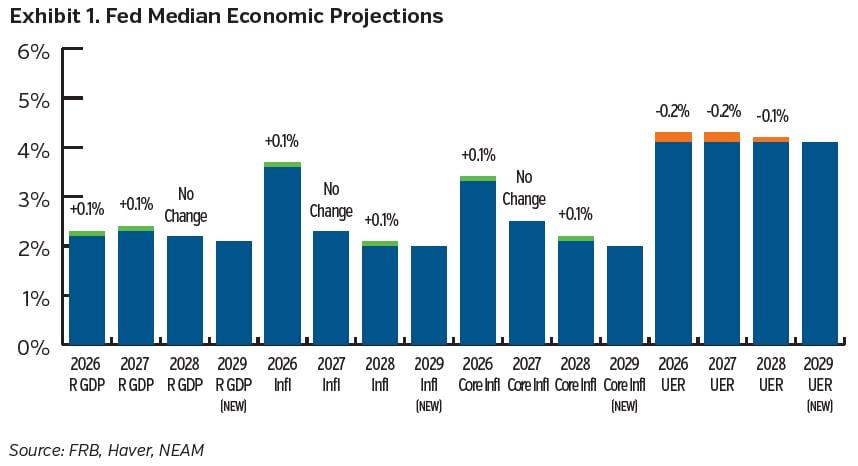
At its most recent meeting, the Federal Open Market Committee unanimously voted to raise its benchmark rate range by 25 basis points to 3.75%-4.00%. This was the Fed’s first rate increase since July 2023. In his post-meeting press conference, Chairman Warsh described the economy as “strengthening” and the labor market as being in “good shape.” However, he emphasized that the “plain fact is inflation is too high and has been for too long.” At its July meeting, the committee had chosen to wait for more guidance from incoming data before deciding whether to act in September. By the September meeting, the economy was still growing and unemployment remained low, but inflation was not moving at a “sufficient speed” toward the committee’s 2% objective. Geopolitical concerns and their potential effects on prices reinforced the case for action. Committee members also judged that financial conditions were not restrictive enough and therefore decided to remove a “dose of accommodation.” The meeting also included an updated set of median economic projections. Compared with the June estimates, projected growth edged higher and unemployment moved lower. Inflation projections increased and extended further into the future, with the 2% objective not reached until 2029. The median federal funds rate path assumed another 25-basis-point increase in 2026, with the rate remaining at that level in 2028 before declining to a level that was still more restrictive than previously projected.
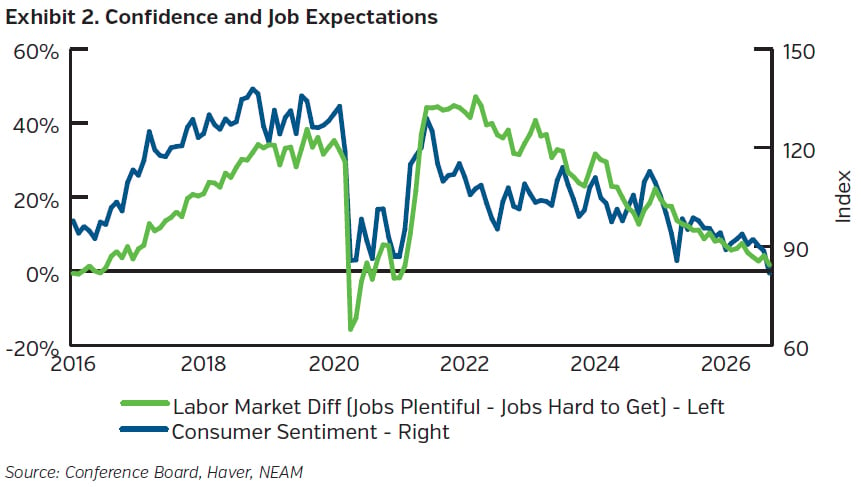
Labor-market data remained healthy, though September payroll growth slowed from the prior month. Nonfarm payrolls rose by 29K, while August’s gain was revised down to 133K; the three-month average is now 51K. Over the past two months, labor-force growth has outpaced household employment, lifting the unemployment rate by 0.1 percentage point to 4.2%; participation stands at 61.8%. JOLTS showed fewer job openings and a lower layoff rate, while the quits rate was unchanged. Together, these trends suggest employers remain reluctant to either add or reduce staff. The Conference Board’s labor market differential, which compares jobs viewed as plentiful with those viewed as hard to get, also declined. Employment concerns, higher prices, and pressure on personal finances and business conditions weighed on consumer confidence. Even so, BEA revisions to personal income and second-quarter GDP raised prior estimates of the savings rate and consumption. Retail sales also advanced 1.2% overall and 1.4% at the core level, led by non-store retailers, with gains across nearly every sector.
The most recent NFIB Small Business Optimism Index receded slightly to 98.7, with a reduction in the number of firms expecting the economy to improve weighing the most to the downside. Small businesses are still focused on finding quality labor, their single biggest issue, while also grappling with the need to raise prices. Overall, however, optimism remains above its long-term average, and the data supports the Fed’s portrayal of a healthy labor market. Industrial production was flat on the month, with gains in utilities and mining offset by the manufacturing sector's first decline in several months. Business investment also showed a retracement, although it improved relative to last year.
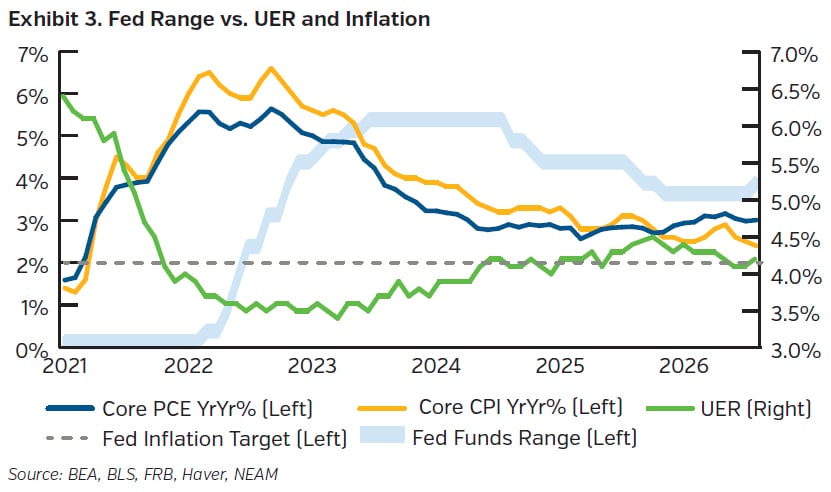
Headline inflation matched market expectations, while core inflation came in higher. Headline CPI rose 0.4% for the month, driven by a 3.1% increase in energy prices; food prices increased 0.1%. Core CPI rose 0.3%, with core goods up 0.1% and core services up 0.3%. Within core goods, higher prices for new and used vehicles and other goods more than offset declines in medicinal drugs. Core services were lifted by education and communication services, airfares, and lodging away from home. Those gains outweighed softer increases in major shelter components and declines in medical care, professional services, and motor vehicle insurance. On an annual basis, headline and core inflation measured 3.4% and 2.4%, respectively, leaving core inflation above the Fed’s ultimate target. Monthly headline and core PCE inflation of 0.3% and 0.2% came in at or below expectations. The BEA’s annual update and revisions also lowered the year-over-year PCE readings to 3.4% for headline and 3.0% for core. Although inflation is broadly moving in the right direction, Warsh’s post-FOMC comments emphasized that too many underlying components are still rising too quickly for the Fed’s comfort. With the labor market near full employment, price stability is now a key focus.
Capital Market Implications
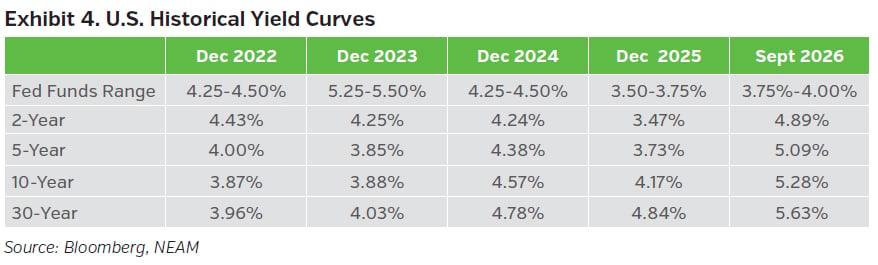
With the Fed growing more comfortable with the economy’s momentum despite ongoing geopolitical conflict, its focus on bringing about price stability led to an increase in its benchmark rate over the month to remove a level of accommodation. Treasury yields and credit spreads increased, while equity markets performance was mixed.
Capital Markets
Fixed Income Returns
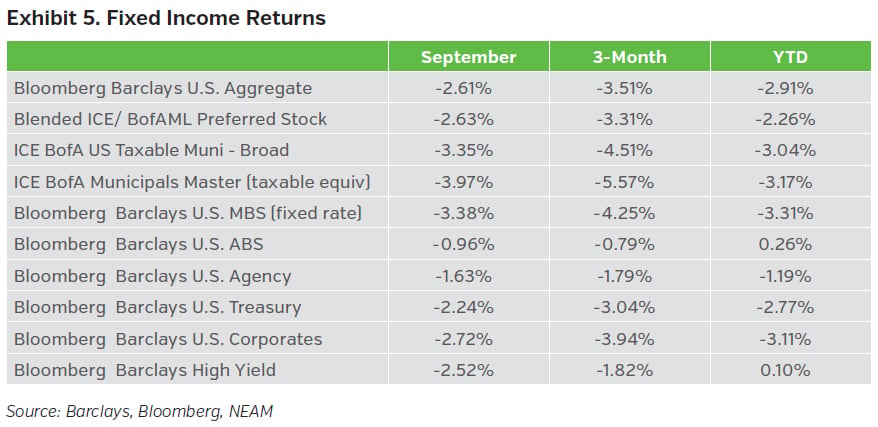
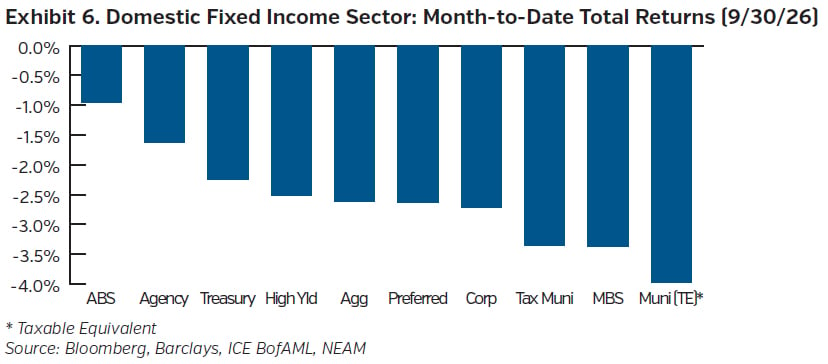
An increase in the Fed Funds rate, combined with expectations for further rate increases as inflation remains above target and growth is healthy, propelled Treasury yields higher in September while credit spreads widened.
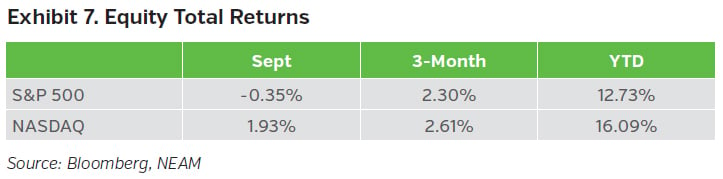
Equity Total Returns
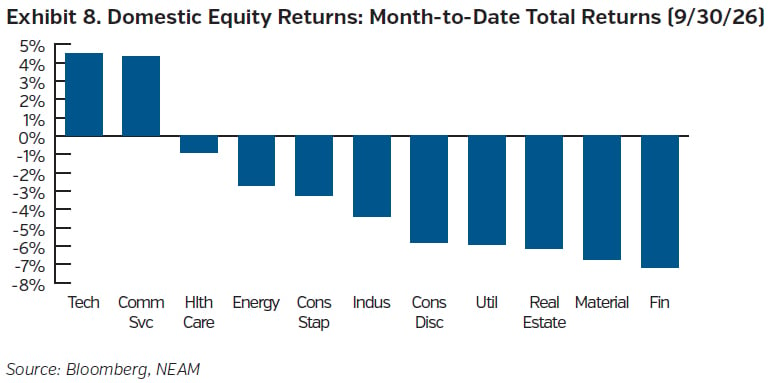
Continued optimism regarding earnings growth, particularly in the technology sector, was offset by rising yields and continued geopolitical tension, leaving equity performance mixed in September. The S&P 500 and Dow ended the month lower while the more tech-weighted Nasdaq gained.