


October Overview
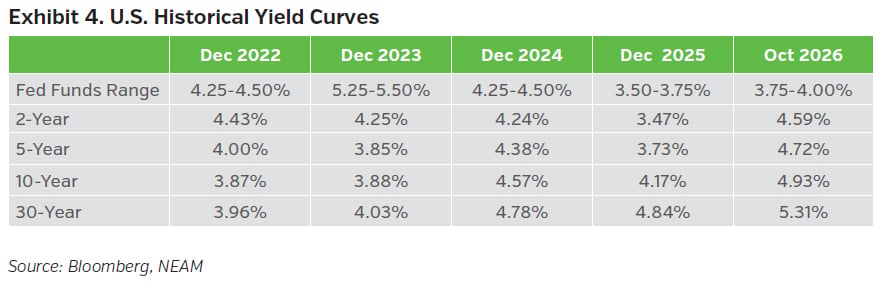
As expected, the Fed decided to maintain the target range for the federal funds rate at 3.75% to 4% at its October 28 meeting. There were two dissents in favor of a quarter-point hike. The statement upgraded the assessment of economic activity from “solid” to “strong” and noted that the “accumulation of more information” will help determine the appropriate policy stance to return inflation to the 2% goal. The statement and subsequent press conference suggest that the Fed will consider market and financial conditions, alongside economic data and the effects of higher rates on the economy, when determining the future policy rate. Perhaps the biggest surprise from the press conference was Warsh’s announcement that, beginning in 2027, one of the eight FOMC meetings will focus on strategic policy discussion rather than a policy vote. The number of such meetings will increase to two in 2028. This change could increase volatility around meetings at which a policy rate change is possible. Taken together, signals from the Fed and fed funds futures pricing point to a 25-basis-point rate hike in December.
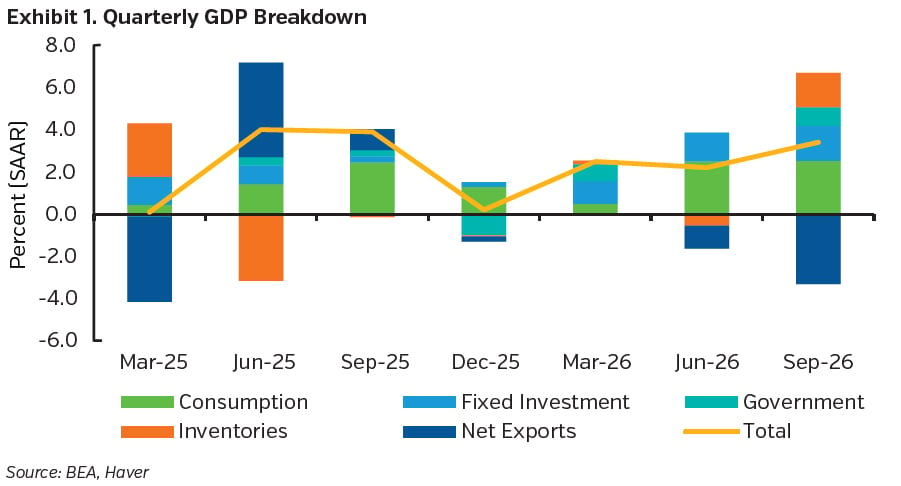
The first look at real third-quarter GDP indicated impressive growth at a 3.4% annualized rate, up from 2.2% in the second quarter. Investment, consumer spending, and government spending contributed to the acceleration, while declining exports and rising imports weighed on output. Underlying domestic demand remained strong: real final sales to private domestic purchasers increased 4.9%, versus 4.6% in the prior quarter. Overall, the data show continued strength in consumer and business spending, with limited evidence that higher interest rates restrained economic activity during the period.
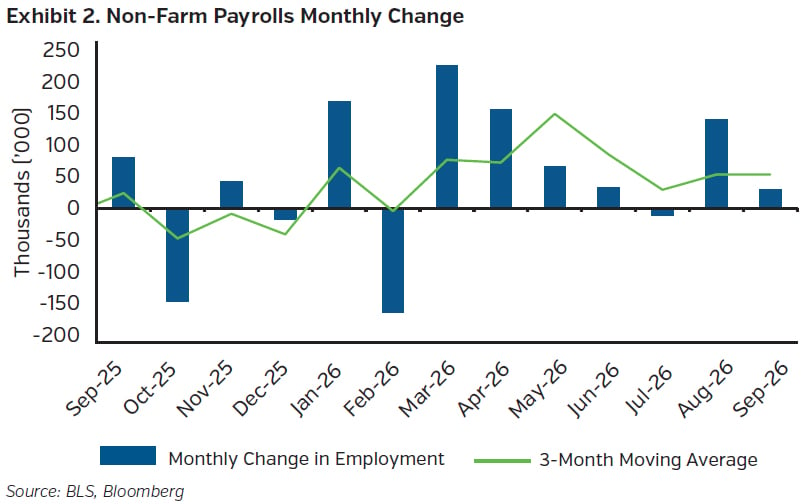
The labor market continues to show stability. The September employment report showed just 29,000 additional payroll jobs, accompanied by combined downward revisions of 60,000 for July and August. Unemployment stood at 4.2%, within its recent range, suggesting weak hiring rather than a sharp deterioration in employment. Weekly initial unemployment claims remained low, at fewer than 200,000 per week, well below the pre-pandemic level of 250,000. Nevertheless, households faced pressure as real average hourly earnings declined 0.7% year over year in September. Taken together, the data depict a low-hiring, low-layoff environment with diminishing income support for consumption.
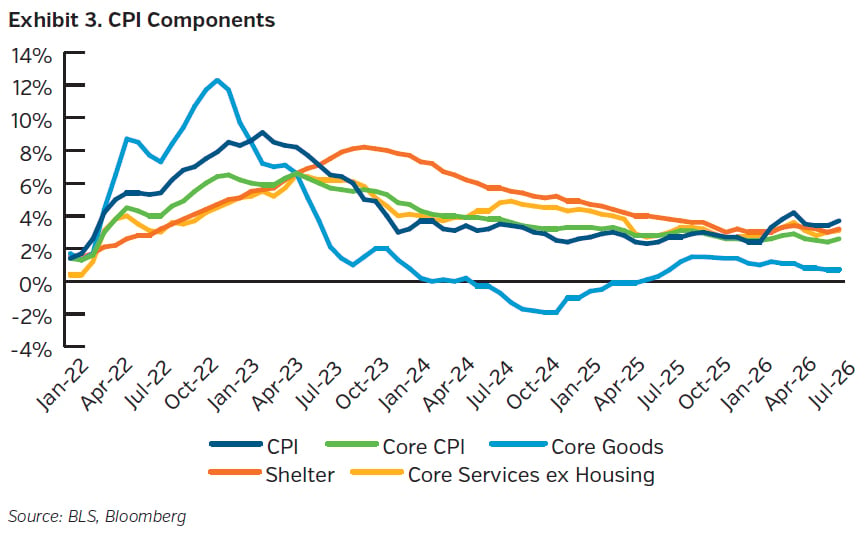
Over the past six months, headline and core PCE inflation have stabilized at 3.5% and 3%, respectively, reflecting energy-related pressures, labor shortages in select industries, supply chain disruptions, and AI-related capital spending that is boosting demand for equipment and power. The stubbornness of these metrics suggests that supply shocks are fueling sticky inflation, which may be harder to unwind with monetary policy tightening alone.
Capital Market Implications
Treasury yields fell over the month as an AI-related equity sell-off drove a flight to safety. Despite this decline, resilient growth, sticky inflation, persistent fiscal deficits, and a hawkish Fed should keep yields elevated. The current backdrop supports attractive all-in yields and a bias toward higher-quality credit as potential negative effects of higher rates on the economy unfold.
Capital Markets
Fixed Income Returns
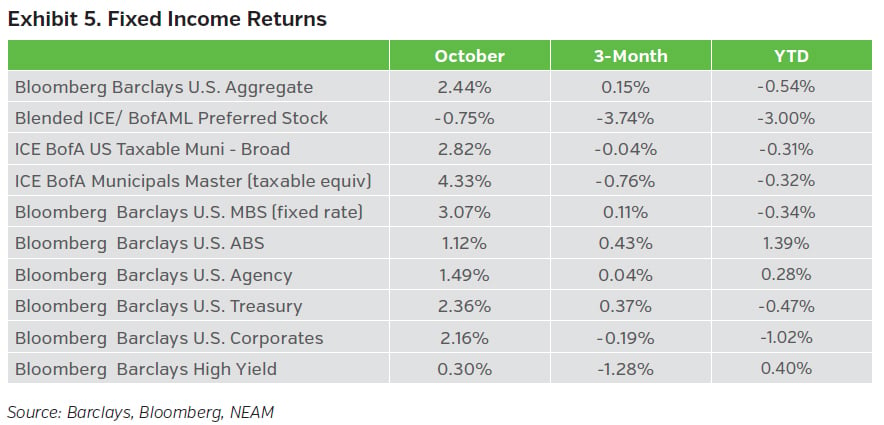
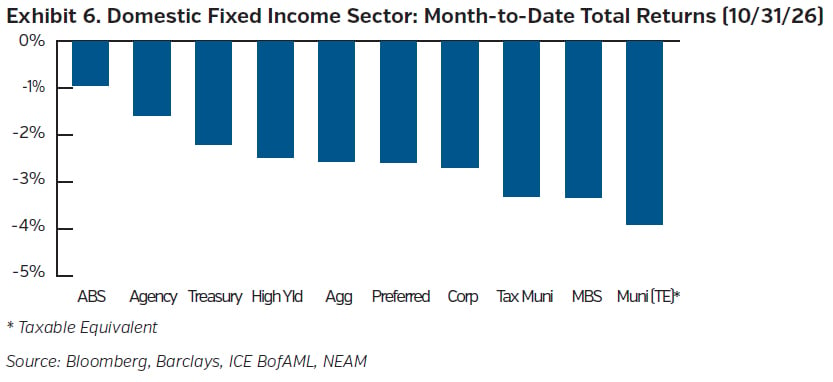
Most fixed income sectors rallied in October as an AI equity sell-off drove demand for Treasuries. Credit spreads widened on concerns over debt-funded AI spending and bond issuance by hyperscalers and infrastructure companies. Despite stabilization in rates compared to last month, persistent inflation, geopolitical risks, and the Fed’s “higher for longer” stance suggest continued elevated rate levels.
Equity Total Returns
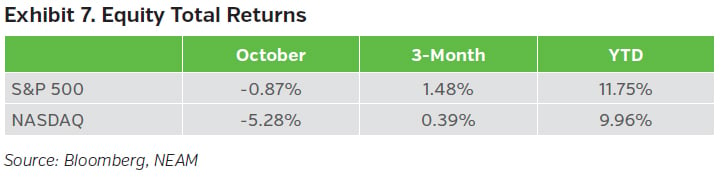
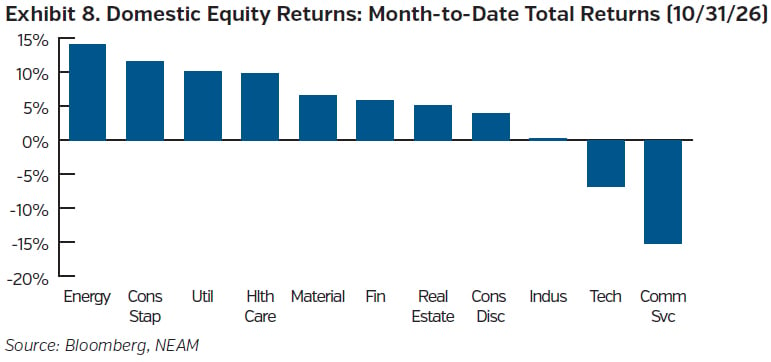
AI and mega-cap technology repricing drove October’s equity losses. Investors scrutinized heavy debt issuance, execution risks amid higher rates, and AI investment returns. Rotation into defensive, high-quality, and value stocks helped the equal-weighted S&P 500 significantly outperform the market-cap-weighted index.