


November Overview
With the Fed facing a combination of a slowing labor market, above target inflation and reduced available data from the government shutdown, it was no surprise to see that the October meeting’s minutes highlighted a growing disparity of views with respect to near-term policy. The minutes shared that “participants expressed strongly differing views about what policy decision would most likely be appropriate at the Committee’s December meeting.” While “most” participants believe the target rate should continue to decline as they move it towards its neutral level, the debate appeared to hinge more on the timing of such reductions. Although opinions diverged, the minutes suggested that more committee members than not believed it may make sense to wait this year given their economic outlooks. In addition, with employment data from recent months being delayed, the October and November payroll reports are expected to arrive after the December FOMC meeting, and important inflation data in the interim perhaps not seeing the light, policy makers will also face the challenge of navigating the landscape with a more obscured view. As Powell shared in his post-October press conference, a step down in the policy rate in December is not a “foregone conclusion,” but “far from it,” and with policy not on a “preset course” and remaining data dependent, the market’s expectation of a lower target rate in December varied over the month as the committee’s debate continues.
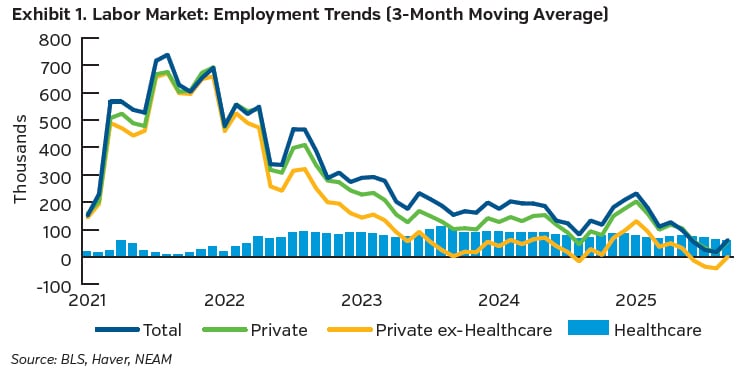
On the labor front, delayed BLS nonfarm payrolls data from September, released in mid-November, came in above market expectations at +119K, and the household employment report showed that the participation rate ticked up to 62.4%, helping push up the unemployment rate to 4.4% as labor force growth outpaced household employment growth.
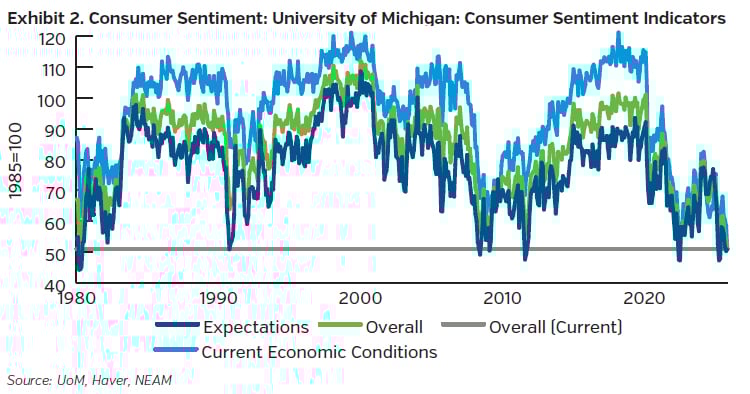
Wage growth continues, rising by +0.2% for the month and 3.8% for the year. With the labor market softening, November consumer sentiment fell again, as concerns over the economy mounted with the government shutdown extending through the survey period. The University of Michigan survey highlighted that consumers overall remain less optimistic about their current situation versus expectations, although both measures sit at or near the low end of historic levels, with concerns over softer earnings and higher inflation impacting their personal finance profiles.
In contrast, the Conference Board’s numbers showed a more material drop in their expectations, and a measure of their view on the employment situation continues to trend downwards as jobs considered plentiful decline and those considered hard to get trend upwards.
Small business optimism edged lower again, and the percent reporting positive earnings trends declined noticeably, although it remains near the five-year average. Encouragingly, uncertainty also fell, though it remains elevated relative to historical levels. Plans to increase employment ticked down, as did reports of difficulty finding qualified workers, while the number of unfilled positions remained steady. Survey respondents also indicated that fewer small business owners are optimistic about the economic outlook or the prospect for increased real sales. Regional PMIs shared mixed sentiment, with capex intentions remaining a brighter spot, while the Fed’s Beige Book indicated improved expectations overall for manufacturing.
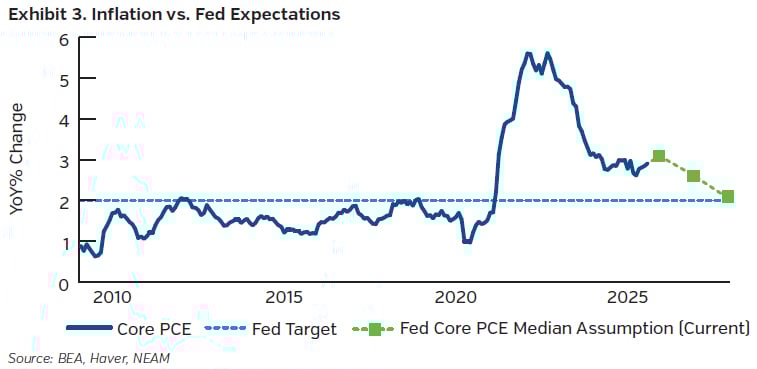
On the inflation front, levels remain above the Fed’s target. Although government data in this area was also impacted by the shutdown, alternative measures and anecdotal evidence point to continued upward pressure on prices. Trend-wise, core goods have been increasing as the impact of tariffs works through the system, while core services overall have trended downward, driven by declining shelter costs. Meanwhile, Fed Beige Book commentary shared that prices continued to rise “moderately” across all districts, with expectations for a continuation of this trend over the next year, highlighting that the Fed’s mission to lower inflation is not yet complete.
Capital Market Implications
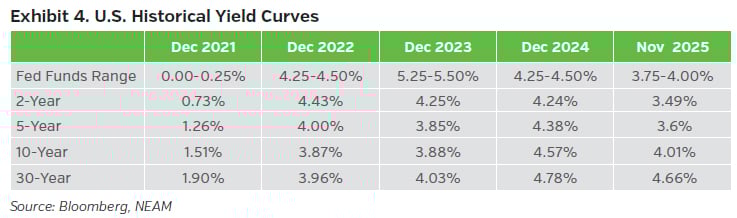
A cautious Fed characterized by differing views, combined with mixed economic data, led to swings in expectations for a near-term rate cut. Treasury yields ended the month slightly lower for the most part, while credit spreads widened modestly. Domestic equity markets rallied into month end, leaving their performance mixed for the month.
Capital Markets
Fixed Income Returns
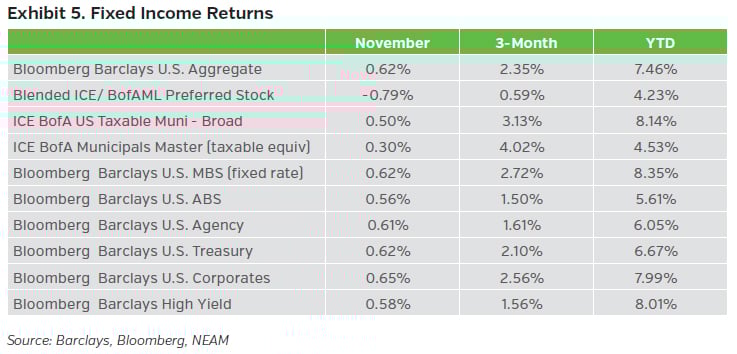
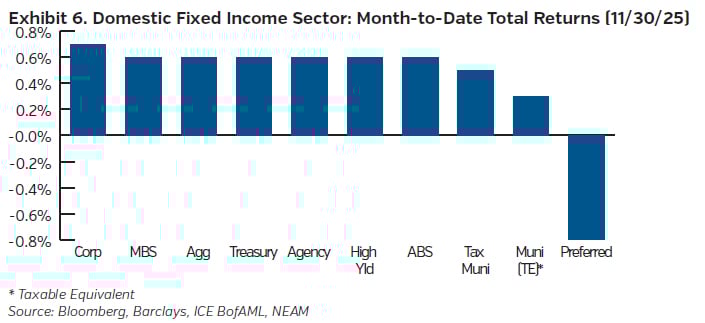
More dovish Fed rhetoric from select Fed officials towards month end renewed optimism for further Fed easing at the upcoming December FOMC meeting, following the rate cut at the end of October. Treasury yields fell for the most part across the curve over the month, while credit spreads widened modestly.
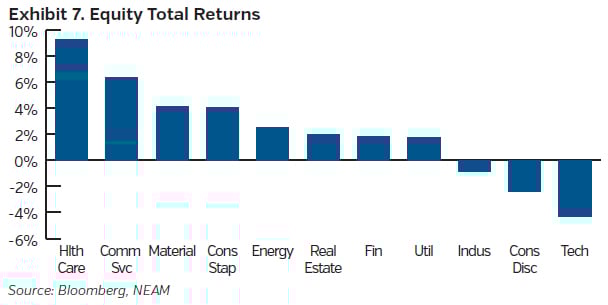
Equity Total Returns
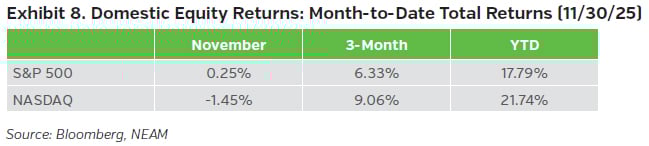
Equity markets were volatile in November. Dampened rate cut prospects, combined with AI growth related concerns, led equities lower for the first half of the month, before dovish commentary from select Fed officials re-ignited hopes for lower rates and helped stir an equity rally into month end. At month’s close, the Dow and S&P 500 ended the month marginally higher, while the Nasdaq fell slightly.